The Best Zucchini Bread Recipe: Moist, Easy, and Perfect Every Time
There is nothing quite like the aroma of freshly baked goods wafting through your home. If you want to master the best zucchini bread recipe, you have come to the right place. This guide helps you transform simple garden produce into a delicious treat that your family will crave.
Achieving a moist zucchini bread requires just a few smart techniques. By using fresh, high-quality ingredients, you ensure that every slice stays tender and flavorful for days. This easy zucchini bread recipe simplifies the steps, making it accessible for bakers of all skill levels.

Whether you prefer a healthy zucchini bread packed with nutrients or a sweet cinnamon zucchini bread, this method provides the perfect foundation. You will love how this homemade zucchini bread becomes a reliable staple in your kitchen. Follow this zucchini bread recipe to enjoy professional results with minimal effort.
Key Takeaways
- Select firm, fresh produce for the best texture and flavor.
- Grate your vegetables finely to ensure even moisture distribution.
- Do not overmix the batter to keep the crumb light and tender.
- Add warm spices like cinnamon to enhance the natural sweetness.
- Store your loaf in an airtight container to maintain freshness.
Understanding the Science of a Perfect Zucchini Loaf
Mastering the best zucchini bread recipe starts with grasping the science of quick breads. Unlike yeast breads that rely on fermentation, these loaves use chemical leaveners like baking powder or soda to rise. This process creates a rapid release of carbon dioxide, which gives your bread its signature lift.
The moisture content of your vegetable is the most critical factor for a successful zucchini loaf. As the bread bakes, the water trapped within the grated zucchini is released into the batter. This hydration process ensures that the flour proteins develop properly, resulting in a tender crumb that stays moist for days.
Achieving the ideal texture in a quick bread recipe requires a delicate balance of ingredients. If your ratio of wet to dry components is off, the bread may become gummy or fail to set in the center. Proper heat distribution in your oven allows the structure to solidify before the leavening agents lose their power.
| Ingredient Category | Primary Function | Impact on Texture |
|---|---|---|
| Leavening Agents | Gas Production | Provides height and aeration |
| Zucchini Moisture | Hydration | Ensures a tender, soft crumb |
| Fats (Oil/Butter) | Shortening | Creates a rich, moist mouthfeel |
| Dry Flour | Structure | Forms the base of the loaf |
Understanding these fundamental principles helps you troubleshoot your baking projects with confidence. By controlling how your ingredients interact, you ensure that every slice is consistent and delicious. Precision in your measurements remains the best way to guarantee professional results in your own kitchen.
Essential Ingredients for Your Zuchinis Bread Recipe
Every great zucchini bread recipe relies on the quality of the ingredients you choose. When you start with fresh, high-quality components, you ensure that your final product has the perfect crumb and flavor profile. Understanding how these items interact is the first step toward mastering your next quick bread recipe.
Selecting the Freshest Zucchini
The star of your zucchini baking recipe is, of course, the vegetable itself. Look for small to medium-sized zucchini that feel firm and heavy for their size. Avoid any that have soft spots, nicks, or dull skin, as these can introduce unwanted bitterness or excess water.
Younger zucchini are generally more tender and have smaller seeds. This makes them ideal for baking because they integrate smoothly into the batter without leaving large, watery chunks behind.
Choosing the Right Flour and Leavening Agents
For most loaves, standard all-purpose flour provides the best structure. It offers enough protein to hold the moisture of the vegetable while remaining light enough for a tender crumb.
Leavening agents like baking soda and baking powder are essential for a proper rise. Baking soda reacts with the acidity in the batter to create lift, ensuring your loaf is not dense or heavy. Always check that your leavening agents are fresh to guarantee the best results.
The Role of Fats and Sugars in Moisture
Fats and sugars do more than just add flavor to your quick bread recipe. They act as humectants, which means they help the bread retain moisture for several days after baking.
Using oil instead of butter often results in a moister loaf that stays soft even when refrigerated. Similarly, incorporating brown sugar adds a hint of molasses and extra moisture compared to using white sugar alone.
| Ingredient | Primary Function | Impact on Texture |
|---|---|---|
| Zucchini | Moisture & Nutrition | Adds tenderness |
| All-Purpose Flour | Structure | Provides stability |
| Baking Soda | Leavening | Creates a light rise |
| Oil/Fats | Humectant | Ensures long-lasting softness |
Preparing Your Zucchini for Optimal Texture
Preparing your zucchini correctly is the secret to achieving a truly moist zucchini bread. When you take the time to process your vegetables with care, you ensure that the final loaf has a consistent crumb and a delightful mouthfeel. Skipping these steps often leads to a soggy center or uneven baking results.
Washing and Grating Techniques
Start by thoroughly washing your zucchini under cool running water to remove any dirt or debris. You do not need to peel the skin, as it adds beautiful color and extra nutrients to your classic zucchini bread. Once clean, trim off the ends and prepare to grate.
- Use the medium-sized holes on your box grater for the best texture.
- Grate the zucchini in long, steady strokes to keep the strands uniform.
- Avoid using a food processor if possible, as it can turn the vegetable into a watery mush.
Managing Moisture Content
Managing the water content is the most critical step in any successful vegetable bread recipe. Zucchini is naturally high in water, which can easily overwhelm your batter if left unchecked. You must remove the excess liquid to prevent your loaf from becoming dense or gummy.
Place your grated zucchini into a clean kitchen towel or a piece of cheesecloth. Gather the edges tightly and squeeze firmly over your sink until no more liquid drips out. This simple action ensures that your bread stays light, airy, and perfectly baked throughout.
Step-by-Step Mixing Instructions for Success
Transforming simple pantry staples into a bakery-quality treat requires careful attention to your mixing method. By following a logical sequence, you ensure that every slice of your easy zucchini bread recipe turns out perfectly moist and flavorful.
Combining Dry Ingredients
Start by whisking your flour, baking powder, baking soda, and salt in a large bowl. This step is crucial because it ensures that the leavening agents are evenly distributed throughout the flour. Without this thorough mixing, you might end up with uneven pockets of rise or a metallic aftertaste from unmixed baking soda.
Blending Wet Ingredients
In a separate container, combine your eggs, oil, sugar, and vanilla extract until the mixture is smooth and well-incorporated. Adding the grated zucchini at this stage allows the moisture to integrate fully with the fats. This process is the foundation for creating a soft zucchini bread that stays tender for days.
Folding the Batter Without Overmixing
Gently combine your wet and dry mixtures using a spatula. You should fold the ingredients just until the flour streaks disappear, as overmixing develops excess gluten. Excessive stirring is the primary cause of dense, rubbery loaves that lack a light, airy crumb.
| Mixing Stage | Primary Goal | Key Technique |
|---|---|---|
| Dry Ingredients | Even leavening | Whisk thoroughly |
| Wet Ingredients | Moisture balance | Emulsify fats |
| Final Batter | Structure control | Fold gently |
By mastering these simple steps, you guarantee a soft zucchini bread that rivals any professional bakery. This easy zucchini bread recipe relies on your patience during the final fold to maintain the perfect texture.
Enhancing Flavor Profiles with Spices and Add-ins
Spices and textures play a vital role in turning a standard vegetable loaf into a memorable culinary experience. By adjusting your pantry staples, you can easily shift the character of your bake from a simple breakfast item to a sophisticated treat. These small additions allow you to tailor every loaf to your specific cravings.
The Magic of Cinnamon and Nutmeg
Warm spices are the secret to creating a fragrant and inviting cinnamon zucchini bread. Cinnamon provides a sweet, woody base that pairs perfectly with the mild flavor of the squash. Adding a pinch of nutmeg introduces a subtle, nutty complexity that rounds out the profile.
To achieve the best results, consider these tips for spice integration:
- Always use freshly ground spices for a more potent aroma.
- Whisk your spices into the dry ingredients to ensure even distribution.
- Do not be afraid to add a dash of cloves or ginger for extra warmth.
Incorporating Nuts and Dried Fruits
If you enjoy a bit of contrast in your food, adding crunchy or chewy elements is a fantastic strategy. Walnuts and pecans are classic choices that provide a satisfying crunch in every bite. Dried fruits like cranberries or raisins offer a burst of sweetness that complements the earthy notes of the vegetable.
When adding these items, toss them in a small amount of flour before folding them into the batter. This simple step prevents them from sinking to the bottom of the pan during the baking process. You will find that this technique keeps your ingredients evenly suspended throughout the loaf.
Adding Chocolate Chips for a Dessert Twist
When you want to serve your creation as a decadent zucchini dessert, chocolate chips are the perfect solution. Semi-sweet or dark chocolate chips melt slightly, creating pockets of richness that contrast beautifully with the moist crumb. This version is particularly popular with children and makes for an excellent afternoon snack.
“The beauty of a versatile base recipe is that it acts as a canvas for your favorite flavors, whether you prefer the comfort of warm spices or the indulgence of chocolate.”
Feel free to experiment with white chocolate chips or butterscotch morsels for a different flavor profile. Regardless of your choice, ensure you fold these heavy add-ins gently to maintain the light texture of your bread.
Mastering the Baking Process
The way you handle your loaf pan and heat settings determines the final texture of your bread. Achieving a consistent result requires attention to detail during these final stages of preparation. By following these steps, you ensure your classic zucchini bread rises beautifully and develops a perfect golden crust.

Preparing Your Loaf Pan
Properly greasing your pan is essential for a clean release. Use a high-quality baking spray or a light coating of butter followed by a dusting of flour to prevent sticking. This simple step ensures that your baked zucchini bread slides out of the pan without leaving behind any delicious crumbs.
Setting the Correct Oven Temperature
Maintaining a steady oven temperature is vital for an even rise. Most recipes perform best at 350°F (175°C), which allows the center to cook through before the top browns too quickly. Avoid opening the oven door frequently, as this causes temperature fluctuations that can lead to a sunken center.
Testing for Doneness
To determine if your loaf is ready, insert a wooden toothpick into the thickest part of the center. If it comes out clean or with just a few moist crumbs, your bread is finished. If you see wet batter, continue baking for another five minutes before checking again.
| Pan Material | Recommended Temp | Estimated Time |
|---|---|---|
| Metal (Standard) | 350°F | 50-60 Minutes |
| Glass (Heat-Resistant) | 325°F | 60-70 Minutes |
| Silicone | 350°F | 55-65 Minutes |
Cooling and Serving Your Homemade Zucchini Bread
Proper cooling and slicing techniques transform your baked goods into a professional-looking breakfast bread. While the aroma of fresh baking might tempt you to cut a slice immediately, waiting is essential for the internal structure to set. Rushing this process often leads to a gummy texture that ruins your hard work.
The Importance of the Wire Rack
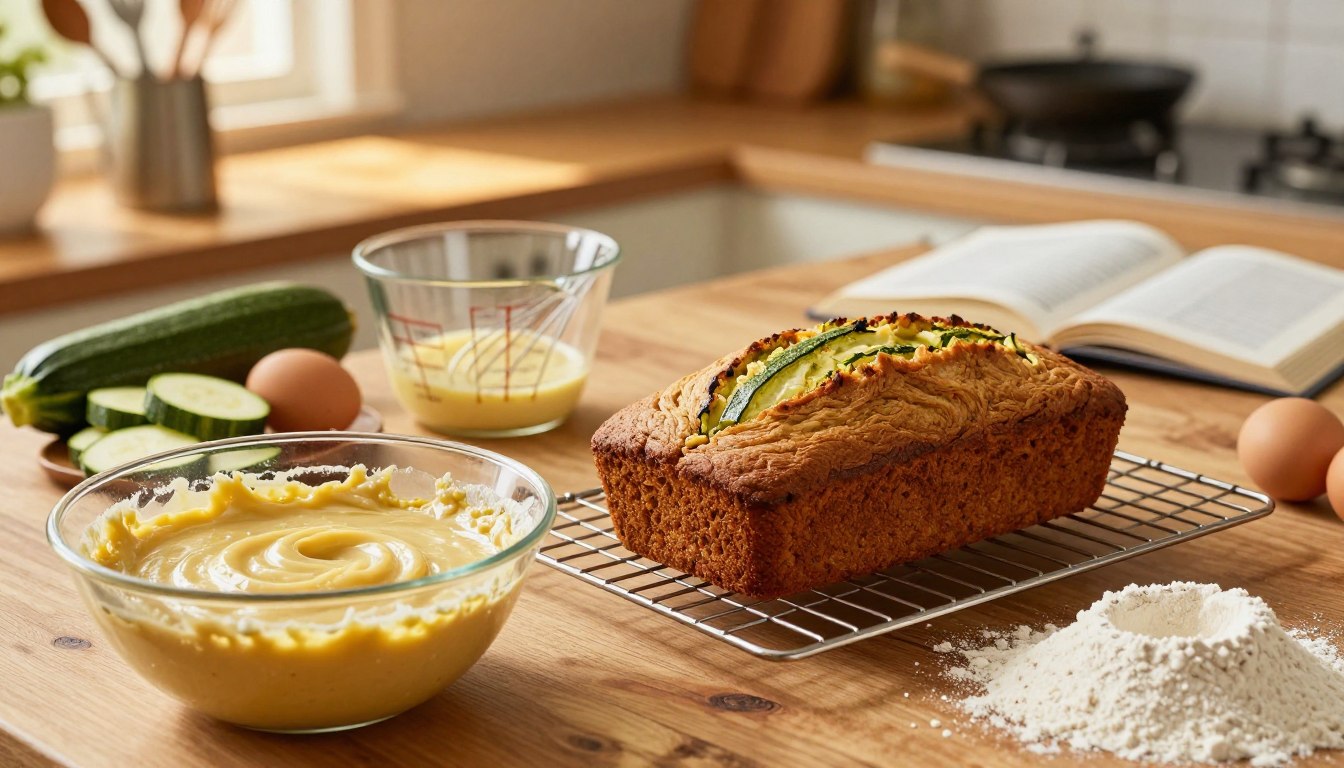
Using a wire cooling rack is the most effective way to ensure your homemade zucchini bread cools evenly. When you leave a loaf inside the pan, steam becomes trapped, which creates a soggy bottom crust. A wire rack allows air to circulate freely around all sides of the loaf.
This airflow helps the moisture evaporate properly, resulting in a firm yet tender crumb. Always remove the bread from the pan after about ten minutes of initial cooling. If you wait too long, the loaf may become difficult to remove without breaking the delicate sides.
Slicing Techniques for Clean Edges
To achieve bakery-quality slices, you must use the right tools and timing. A serrated bread knife is your best friend for this task, as it saws through the crust without crushing the soft interior. Avoid using a standard chef’s knife, which tends to compress the loaf and create uneven, jagged edges.
Wait until the bread is completely cool to the touch before you begin slicing. Cutting into a warm loaf often results in a crumbly mess, as the internal moisture has not yet fully stabilized. For the cleanest presentation, use a gentle sawing motion and let the weight of the knife do the work for you.
| Cooling Method | Texture Result | Crust Quality |
|---|---|---|
| Leaving in Pan | Gummy/Dense | Soft and Soggy |
| Wire Rack | Light/Fluffy | Firm and Crisp |
| Cutting Warm | Crumbly | Torn Edges |
By following these simple steps, you ensure that every piece of your breakfast bread maintains its integrity. Proper cooling and careful slicing make your homemade zucchini bread look as good as it tastes. Enjoy your perfectly prepared treat with your favorite morning beverage.
Storage and Preservation Tips
Keeping your loaf delicious long after it leaves the oven is simpler than you think. Proper handling ensures that your baked zucchini bread retains its signature texture and flavor profile for days. By following a few basic guidelines, you can prevent your treat from drying out or losing its appeal.
Keeping Your Bread Moist at Room Temperature
To maintain the perfect crumb, allow your loaf to cool completely on a wire rack before wrapping it. If you wrap it while warm, condensation will form, leading to a soggy crust. Once cool, wrap the loaf tightly in plastic wrap or store it in an airtight container to lock in moisture.
Consistency is key when it comes to freshness. Keep your breakfast bread in a cool, dry place away from direct sunlight. Under these conditions, your loaf will stay moist and flavorful for up to three days.
“The secret to a great loaf is not just in the baking, but in how you protect it once it hits the counter.”
Freezing Slices for Future Breakfasts
If you want to enjoy your creation over a longer period, the freezer is your best friend. Slice the loaf before freezing so you can grab a single portion whenever you need a quick snack. Wrap each slice individually in plastic wrap, then place them all inside a heavy-duty freezer bag.
This method prevents freezer burn and keeps your breakfast bread tasting as fresh as the day it was baked. When you are ready to eat, simply pop a slice into the toaster or let it thaw on the counter for a few minutes. This simple habit makes your baked zucchini bread a convenient staple for busy mornings.
| Storage Method | Ideal Duration | Best Practice |
|---|---|---|
| Countertop | 2-3 Days | Airtight container |
| Refrigerator | 5-7 Days | Wrap tightly |
| Freezer | Up to 3 Months | Individual wrapping |
Troubleshooting Common Baking Issues
Even the most seasoned home bakers occasionally face hurdles when preparing a zucchini baking recipe. It is completely normal to encounter a loaf that does not rise perfectly or has an unexpected texture. By identifying these common errors, you can refine your technique and ensure consistent success in your kitchen.

Why Your Bread Might Be Too Dense
A dense loaf often results from overmixing the batter once the dry ingredients meet the wet ones. When you stir too vigorously, you develop excess gluten, which makes the bread tough rather than light. Always fold your ingredients gently until they are just combined to maintain a tender crumb.
Another culprit is using too much zucchini without properly draining the excess liquid. Excess moisture can weigh down the batter, preventing it from rising properly during the bake. Ensure you squeeze your grated zucchini well to achieve that desired soft zucchini bread texture.
Preventing a Sunken Center
A sunken center usually indicates that the bread was removed from the oven before it was fully cooked. Even if the top looks golden brown, the middle may still be raw and unstable. Use a toothpick or a cake tester to ensure the center is set before you pull the pan out.
“Baking is a science that requires patience, precision, and a little bit of grace when things do not go exactly as planned.”
Additionally, opening the oven door too early can cause a sudden drop in temperature, leading to a collapse. Try to keep the oven door closed until the final few minutes of the baking time. This helps maintain a stable environment for your loaf to rise evenly.
Fixing Dry or Crumbly Loaves
If your bread turns out dry, you likely used too much flour or not enough fat. Measuring flour by scooping directly with a measuring cup often packs it down, leading to an inaccurate measurement. Instead, use the spoon-and-level method to keep your soft zucchini bread moist and delicious.
You can also check your oven calibration to ensure it is not running too hot. A high temperature will dry out the edges before the center is finished. Refer to the following table to quickly diagnose and solve your baking challenges.
| Issue | Primary Cause | Quick Fix |
|---|---|---|
| Dense Texture | Overmixing batter | Fold gently until just combined |
| Sunken Center | Underbaked loaf | Test with a toothpick |
| Dry/Crumbly | Too much flour | Use spoon-and-level method |
| Uneven Rise | Oven hot spots | Rotate pan halfway through |
Mastering this zucchini baking recipe takes practice, but these tips will help you avoid common pitfalls. With a little attention to detail, you will consistently produce high-quality loaves that are perfect for any occasion.
Adapting the Recipe for Dietary Preferences
You can easily tailor your favorite vegetable bread recipe to fit your unique health goals. Baking is a flexible science, and making small adjustments allows you to enjoy your treats while staying aligned with your personal wellness journey.
Creating a Healthy Zucchini Bread Version
To craft a healthy zucchini bread, start by swapping refined white flour for nutrient-dense alternatives like whole wheat pastry flour or almond flour. These options provide more fiber and protein, which helps keep you full longer.
You should also consider replacing refined white sugar with natural sweeteners. Options like maple syrup, honey, or coconut sugar add a deeper flavor profile while offering a lower glycemic impact. Using unsweetened applesauce in place of some oil can also reduce the overall fat content without sacrificing the moist texture you love.
Gluten-Free and Vegan Substitutions
If you are managing dietary sensitivities, you can still achieve a perfect loaf with the right swaps. For a gluten-free vegetable bread recipe, use a high-quality 1-to-1 gluten-free flour blend that includes xanthan gum to provide the necessary structure.
To make your loaf vegan, replace eggs with a flax egg mixture, which consists of one tablespoon of ground flaxseed meal mixed with three tablespoons of water. This simple change binds the ingredients effectively. You can also use plant-based milk, such as almond or soy, to ensure the batter remains rich and flavorful.
“Baking is a language of love that should be accessible to everyone, regardless of their dietary needs or restrictions.”
The following table outlines how you can modify your standard ingredients to meet specific dietary requirements while maintaining the integrity of your healthy zucchini bread.
| Standard Ingredient | Healthy Alternative | Vegan/GF Option |
|---|---|---|
| All-Purpose Flour | Whole Wheat Pastry Flour | Gluten-Free Flour Blend |
| White Sugar | Coconut Sugar | Maple Syrup |
| Vegetable Oil | Applesauce | Melted Coconut Oil |
| Eggs | Greek Yogurt | Flax Egg |
Creative Ways to Enjoy Your Zucchini Loaf
Your homemade zucchini loaf offers so much more than just a simple snack at the kitchen table. By exploring different serving methods, you can elevate your baking results and ensure that every slice provides a unique culinary experience.
Toasting with Butter and Honey
Toasting your bread is a fantastic way to bring out the deep, earthy notes of this zucchini dessert. Simply slice the loaf into thick pieces and place them in a toaster or under a broiler until the edges turn golden brown.
Once warm, spread a generous layer of salted butter over the surface. Drizzle a touch of raw honey on top to create a perfect balance of sweet and savory flavors that melt into the crumb.
Transforming Leftovers into French Toast
If you find yourself with slightly older slices, do not let them go to waste. You can easily transform your zucchini loaf into a decadent French toast that feels like a gourmet breakfast.
Whisk together eggs, a splash of milk, and a dash of cinnamon in a shallow bowl. Dip each slice into the mixture, ensuring it is well-coated, then fry in a buttered skillet until crisp and golden.
| Serving Method | Best Time of Day | Flavor Profile |
|---|---|---|
| Toasted with Honey | Afternoon Snack | Warm and Sweet |
| French Toast Style | Weekend Brunch | Rich and Decadent |
| Freshly Sliced | Morning Coffee | Light Zucchini Dessert |
Conclusion
Baking the perfect loaf of zucchini bread is a rewarding journey that blends simple science with culinary creativity. You now possess the knowledge to select fresh produce, balance moisture levels, and achieve that ideal crumb structure every time you bake.
Your kitchen is a space for exploration. Feel free to swap in King Arthur flour or experiment with organic spices to tailor each loaf to your personal taste. These small adjustments turn a standard recipe into a signature treat for your household.
Proper storage techniques ensure your hard work stays fresh for days. Whether you enjoy a slice toasted with Kerrygold butter or frozen for a quick morning meal, your homemade bread offers a nutritious way to enjoy seasonal vegetables.
Share your results with friends and family to spread the joy of home baking. Your skills will grow with every batch you pull from the oven. Keep refining your technique and enjoy the process of creating delicious, wholesome food from scratch.
FAQ
What is the secret to making a consistently moist zucchini bread?
To ensure a moist zucchini bread, the key lies in the preparation of your vegetables. You should grate your zucchini using a Box Grater and then gently squeeze out excess liquid with a clean kitchen towel or cheesecloth. This process prevents your zucchini loaf from becoming soggy while still providing enough hydration to create a soft zucchini bread texture. Using high-quality fats, such as Crisco vegetable oil or melted Land O’Lakes butter, also helps lock in moisture for days.
Can I use this quick bread recipe to make a healthy zucchini bread version?
Yes, you can easily adapt this into a healthy zucchini bread by making a few smart substitutions. Try replacing half of the all-purpose flour with Bob’s Red Mill Whole Wheat Flour and swapping refined sugar for natural sweeteners like honey or maple syrup. These changes maintain the integrity of the vegetable bread recipe while boosting the fiber and nutrient content of your breakfast bread.
How do you prevent a classic zucchini bread from becoming too dense?
Density often results from overworking the batter. When you are following an easy zucchini bread recipe, it is essential to fold your dry ingredients into the wet mixture using a Rubbermaid spatula just until combined. Overmixing develops excess gluten, which can turn a light homemade zucchini bread into a tough, rubbery loaf. Always whisk your Arm & Hammer Baking Soda and flour together first to ensure even distribution before the final mix.
What spices are best for creating an aromatic cinnamon zucchini bread?
To achieve a professional-grade cinnamon zucchini bread, use high-quality McCormick Ground Cinnamon paired with a pinch of nutmeg or cloves. The warmth of these spices complements the mild flavor of the vegetable, transforming your bake into a delicious zucchini dessert. For an extra flavor boost, you can add a teaspoon of Nielsen-Massey vanilla extract to the wet ingredients.
How can I tell if my baked zucchini bread is finished in the oven?
The most reliable way to test your baked zucchini bread is the toothpick test. Insert a wooden skewer into the thickest part of the loaf; if it comes out clean or with a few moist crumbs, your zucchini baking recipe is complete. Ensure your oven is set to the correct temperature using an Oven Thermometer to avoid the common pitfall of a loaf that is browned on the outside but raw in the center.
What is the best way to store a homemade zucchini bread to keep it fresh?
To preserve the quality of your best zucchini bread recipe, let the loaf cool completely on a Wilton wire rack. Once cooled, wrap it tightly in Reynolds Kitchens Plastic Wrap and store it at room temperature. For long-term storage, you can freeze individual slices in Ziploc freezer bags, allowing you to enjoy a quick and delicious breakfast bread whenever you desire.
Can I add mix-ins like chocolate or nuts to this zucchini loaf?
Absolutely. This classic zucchini bread serves as an excellent base for various textures. You can fold in Ghirardelli semi-sweet chocolate chips for a decadent twist or added crunch with chopped Diamond of California walnuts. These additions allow you to customize your zucchini dessert to suit your personal palate while following the same fundamental baking steps.
Why did my zucchini loaf sink in the middle after baking?
A sunken center in your homemade zucchini bread usually happens if the loaf is underbaked or if there is an imbalance of leavening agents. Ensure you are using fresh baking powder and that you do not open the oven door too frequently, which can cause temperature fluctuations. Following the best zucchini bread recipe precisely and verifying doneness with a toothpick will help you maintain a perfect, domed top every time.