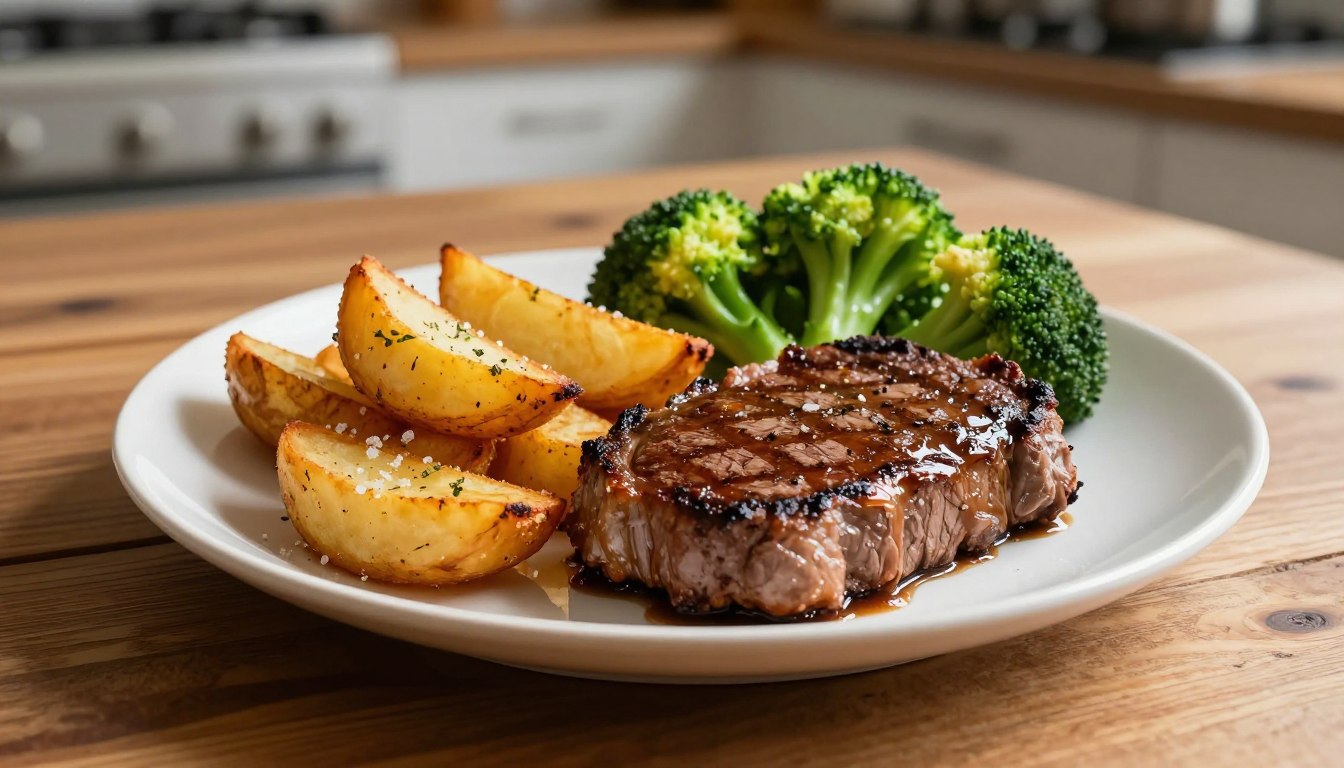
Seasoned Steak with Potato Wedges & Broccoli
Preparing a restaurant-quality dinner at home is easier than you might think. This guide shows you how to craft a perfect steak with potato wedges and broccoli using basic pantry staples. You will learn to balance bold flavors while achieving the ideal texture for every component on your plate.
Mastering this meal involves a simple, coordinated sequence. You will start by prepping your vegetables, then roasting the sides until golden brown. Finally, you will sear your protein to juicy perfection before plating this hearty, nutritious dinner for your family.

These instructions are tailored for the American home cook who values efficiency. By following these practical techniques, you ensure that your steak with potato wedges and broccoli arrives at the table hot, flavorful, and ready to enjoy.
Key Takeaways
- Learn the best seasoning techniques for a savory crust.
- Discover how to achieve crispy edges on your roasted sides.
- Master the timing to ensure all elements finish simultaneously.
- Understand the importance of resting your meat for maximum tenderness.
- Follow a streamlined workflow to minimize your time in the kitchen.
What You Need for This Steak Dinner
A great meal relies on the quality of your ingredients, especially when you are preparing a seasoned steak. Having everything ready before you start cooking ensures a smooth process and a delicious final result.
Steak Cuts That Work Well
Choosing Ribeye, New York Strip, or Sirloin
Selecting the right cut of beef is the most important step for your seasoned steak. Ribeye offers the highest level of marbling, which provides incredible flavor and tenderness. If you prefer a balance between lean meat and flavor, the New York Strip is an excellent choice. For those on a tighter budget, sirloin provides a hearty, beefy taste that works perfectly when prepared correctly.
Selecting Steaks With Even Thickness
Always look for steaks that have a uniform thickness across the entire piece of meat. Even thickness allows the heat to penetrate the steak at the same rate, preventing one side from overcooking while the other remains raw. This consistency makes it much easier to achieve your desired internal temperature without constant guesswork.
Ingredients for the Potato Wedges and Broccoli
Potatoes, Broccoli, Oil, and Seasonings
To round out your meal, you will need a few pantry staples and fresh produce. Gather the following items to ensure your sides are just as flavorful as the main course:
- Russet or Yukon Gold potatoes for crispy wedges
- Fresh broccoli florets
- High-smoke point oil, such as avocado or grapeseed oil
- Kosher salt and freshly cracked black pepper
- Garlic powder and smoked paprika for a deep, savory crust
Optional Finishing Ingredients
You can elevate your seasoned steak dinner by adding a few final touches before serving. Consider keeping these items on hand to customize your plate:
- Unsalted butter for basting
- Fresh herbs like rosemary or thyme
- Lemon wedges to brighten the roasted broccoli
- Grated Parmesan cheese or chili flakes for extra texture and heat
How to Season the Steak and Prepare the Ingredients
Preparing your ingredients correctly is the secret to a restaurant-quality steak dinner at home. By taking a few moments to organize your workspace, you ensure that every component of your meal reaches the table at the perfect time.
Pat the Steaks Dry Before Seasoning
Before you apply any seasoning, you must remove surface moisture from the meat. Use a clean paper towel to pat the steaks until they are completely dry.
This simple step is essential for achieving a deep, golden-brown crust. If the surface remains wet, the meat will steam instead of sear when it hits the hot pan.
Build a Simple Seasoning Blend
A great steak dinner starts with a balanced flavor profile. You can create a classic crust by combining a few pantry staples.
Using Salt, Black Pepper, Garlic, and Paprika
Start with a generous amount of kosher salt and freshly cracked black pepper. Add garlic powder and smoked paprika to provide a savory depth and a beautiful color to the exterior of the meat.
Adding Herbs or Red Pepper Flakes
If you prefer a bolder profile, consider mixing in dried thyme or rosemary. A pinch of red pepper flakes also adds a subtle heat that complements the richness of the beef.
Cut the Potatoes and Broccoli for Even Cooking
Uniformity is the key to ensuring your sides finish cooking at the same time as your protein. Consistent sizing allows heat to penetrate each piece at an equal rate.
Making Uniform Potato Wedges
Slice your potatoes into wedges that are roughly the same thickness. This prevents smaller pieces from burning while larger ones remain raw in the center.
Separating Broccoli Florets From Thick Stems
Cut the broccoli into bite-sized florets to maximize surface area for roasting. If the stems are particularly thick, trim them down or slice them into smaller rounds so they become tender and delicious alongside your steak dinner.
Prepare the Potatoes for Crispy Potato Wedges
Preparing your potatoes correctly is the secret to elevating a classic steak and potatoes meal. Achieving that golden, crunchy exterior requires attention to detail during the initial stages of your kitchen workflow.
Soak or Rinse the Potato Wedges
Start by rinsing your cut wedges under cold running water to remove excess surface starch. For even better results, let them soak in a bowl of cold water for about fifteen minutes. This simple step prevents the pieces from sticking together and helps them crisp up beautifully in the heat.
Dry the Potatoes Thoroughly
After soaking, you must pat the wedges completely dry using a clean kitchen towel or paper towels. Moisture is the enemy of crispiness; if the potatoes are wet, they will steam rather than roast. Ensuring they are bone-dry is a vital step in perfecting your steak and potatoes dinner.
Coat the Wedges With Oil and Seasoning
Once dry, toss your wedges in a bowl with a light coating of high-smoke-point oil and your chosen seasonings. You want every surface to be lightly coated to encourage even browning and flavor development.
Using Enough Oil Without Making the Potatoes Greasy
Use just enough oil to create a thin, glistening layer on the skin of each wedge. Avoid pooling oil at the bottom of the bowl, as excess fat will lead to a soggy texture rather than a satisfying crunch. A light drizzle is usually sufficient to achieve the desired golden finish.
Arranging Wedges With Space Between Them
Place the seasoned wedges on your baking sheet in a single layer. It is crucial to leave space between each piece to allow hot air to circulate freely. If the potatoes are crowded, they will trap steam and fail to develop that signature crispy edge.
Set the Oven Temperature and Position the Pan
Preheat your oven to 425°F (220°C) to ensure the potatoes begin roasting immediately upon contact with the pan. Position your rack in the center of the oven for the most consistent heat distribution. This setup allows the potatoes to develop a deep, toasted color while you prepare the rest of your meal.
Roast the Potatoes Until Golden and Crisp
Once your oven reaches the target temperature, it is time to transform your seasoned potatoes into a culinary masterpiece. Place your baking sheet on the center rack to ensure consistent heat circulation. This initial phase is crucial for developing the foundation of your crispy potato wedges.

Start Roasting the Potato Wedges
Arrange the wedges in a single layer, ensuring they do not touch each other. Overcrowding the pan creates steam, which prevents the edges from browning properly. Give each piece enough space to allow the hot air to crisp the surface effectively.
Turn the Wedges for Even Browning
After about 15 to 20 minutes, use a spatula to flip each wedge. This simple action ensures that both sides achieve a uniform, golden-brown color. Consistency is the hallmark of a well-prepared side dish.
Checking for a Crisp Exterior
You will know the potatoes are nearing completion when the edges look rigid and deep golden. A properly roasted wedge should offer a satisfying crunch when bitten. If the color looks pale, give them a few extra minutes under the heat.
Testing the Centers for Tenderness
While the outside should be firm, the inside must be soft and fluffy. Gently pierce the thickest part of a wedge with a fork to check for resistance. If the fork slides in easily, your potatoes are perfectly cooked.
The best roasted vegetables are those that balance a caramelized, crunchy exterior with a creamy, tender interior.
Professional Chef
Adjust the Timing for Different Potato Sizes
Keep in mind that cooking times are merely guidelines rather than strict rules. Larger wedges will naturally require more time in the oven than smaller, thinner slices. Always rely on your visual cues and the fork-test method to determine when they are ready.
Keep the Finished Wedges Warm
Once you remove the crispy potato wedges from the oven, you want to maintain their texture until serving. Avoid covering them tightly with foil, as this traps steam and will quickly soften your hard-earned crust. Instead, follow these simple tips:
- Place the wedges on a wire rack to allow air to circulate underneath.
- Keep them in a warm area of your kitchen, away from cold drafts.
- Serve them immediately to enjoy the best possible crunch.
Seasoned Steak with Potato Wedges and Broccoli: Coordinate the Cooking
Coordinating your cooking process ensures that your steak with potato wedges and broccoli hits the table at the same time. Since potatoes require a longer roasting duration, you should start them well before the meat. By aligning the finish times, you avoid the frustration of cold sides or overcooked beef.
Plan the Timing for Steak, Potatoes, and Broccoli
Begin by placing your seasoned potatoes in the oven, as they typically need 30 to 40 minutes to achieve a crispy texture. While the wedges roast, prepare your steak and broccoli. You can time the searing of the meat to occur during the final ten minutes of the potato roasting cycle.
Choose Between a Skillet, Grill, or Broiler
The method you select for your steak with potato wedges and broccoli significantly impacts the final flavor profile. Each technique offers unique benefits for achieving a deep, savory crust on your protein.
Using a Cast-Iron Skillet
A cast-iron skillet is a favorite for home cooks because of its exceptional heat retention. It creates a consistent, even sear across the entire surface of the meat. This method also allows you to baste the steak with butter and aromatics during the final stages of cooking.
Grilling the Steak Outdoors
If you prefer a smoky flavor, an outdoor grill is an excellent choice. The high heat of the flames produces a distinct char that is difficult to replicate indoors. Ensure your grill grates are clean and well-oiled to prevent sticking.
Heat the Cooking Surface Before Adding the Steak
Always preheat your skillet or grill until it is smoking hot before adding the meat. A cold surface will cause the steak to steam rather than sear, resulting in a gray, unappealing exterior. Proper heat is essential for developing that rich, brown crust that locks in juices.
Avoid Overcrowding and Excess Moisture
Never crowd your pan, as this lowers the temperature and traps steam. If you are cooking multiple steaks, work in batches to maintain high heat. Additionally, pat the surface of the meat dry with paper towels to remove surface moisture, which helps the browning process happen much faster.
Use a Meat Thermometer for Reliable Results
Relying on a meat thermometer is the most accurate way to ensure your steak reaches the perfect level of doneness. Visual cues can be misleading, but a digital probe provides immediate, precise feedback. Refer to the following guide to determine your preferred internal temperature.
| Doneness Level | Internal Temperature | Color Description |
|---|---|---|
| Rare | 120°F – 125°F | Cool red center |
| Medium-Rare | 130°F – 135°F | Warm red center |
| Medium | 140°F – 145°F | Warm pink center |
| Medium-Well | 150°F – 155°F | Slightly pink center |
Cook the Steak for a Juicy, Well-Browned Finish
The journey to a delicious, well-browned steak begins the moment the meat hits the hot surface. By following a structured approach, you ensure that every bite remains tender and flavorful.

Step 1: Sear the First Side
Listen for a Steady Sizzle
When you place the meat into the pan, you should hear a loud, consistent sizzle. This sound indicates that the surface moisture is evaporating quickly, which is essential for creating a beautiful crust.
Leave the Steak Undisturbed to Build a Crust
Resist the urge to move or flip the meat too early. Leaving it alone allows the proteins to caramelize properly, resulting in a deep, savory flavor profile that defines a juicy steak.
Step 2: Sear the Second Side
Once the first side develops a deep brown color, carefully flip the meat. Cook the second side for a similar duration to ensure even browning across the entire surface.
Step 3: Cook the Fat Cap and Edges
Use tongs to hold the steak vertically so the fat cap touches the pan. This renders the fat, making it crispy and infusing the meat with extra richness.
Step 4: Add Butter, Garlic, or Herbs if Desired
Basting Without Burning the Aromatics
Lower the heat slightly before adding butter, garlic, or fresh herbs like rosemary. Spoon the foaming butter over the meat continuously to baste it, but keep an eye on the garlic to prevent it from turning bitter.
Step 5: Check the Internal Temperature
Medium-Rare, Medium, and Well-Done Temperature Targets
Use a reliable meat thermometer to monitor the steak internal temperature. Aim for 130°F to 135°F for medium-rare, 140°F to 145°F for medium, and 150°F or higher for well-done.
Following the USDA Minimum for Beef Steaks
The USDA recommends a minimum internal temperature of 145°F for safety. Always verify your progress to ensure your meal meets your preferred level of doneness.
Step 6: Rest the Steak Before Slicing
Proper steak resting time is the final secret to success. Let the meat sit on a warm plate for at least three minutes before you begin slicing, as this allows the juices to redistribute throughout the fibers.
Roast Broccoli Until Tender With Crisp Edges
Perfectly roasted broccoli provides a delicious crunch that complements your juicy steak. This simple vegetable side dish adds vibrant color and essential nutrients to your plate. By following a few basic techniques, you can ensure every floret turns out tender with perfectly toasted edges.
Season the Broccoli for Roasting
Start by tossing your fresh broccoli florets in a bowl with high-quality olive oil. Ensure each piece is lightly coated to promote even browning in the oven. Season generously with kosher salt, cracked black pepper, and minced garlic for a savory depth of flavor.
Add Broccoli at the Right Point in the Cooking Process
Timing is everything when you want your entire meal to be ready at once. Broccoli cooks much faster than potato wedges, so you should add it to the oven during the final 15 to 20 minutes of the potato roasting time.
Roasting Broccoli on the Potato Pan
If you have enough space, you can push the potato wedges to one side of the sheet pan. Carefully arrange the broccoli in a single layer on the remaining space. This method saves on cleanup but requires careful monitoring to ensure the vegetables do not steam each other.
Using a Separate Sheet Pan
Using a separate pan is often the best way to achieve maximum crispness. This allows for better airflow around the florets, which is crucial for achieving that signature roasted broccoli texture. Place the second pan on a different rack to ensure even heat distribution.
Prevent the Florets From Burning
To keep the delicate tips from charring too quickly, avoid overcrowding the pan. Give each piece enough room so that the heat can circulate freely. If you notice the edges browning too fast, simply move the pan to a lower rack position.
Check for a Tender Stem and Toasted Tips
You will know your vegetables are ready when the stems are easily pierced with a fork. The florets should look slightly browned and crispy, while the stems remain tender. Use the following guide to track your progress during the roasting process:
| Indicator | Visual Cue | Texture Goal |
|---|---|---|
| Early Stage | Bright green color | Firm and crisp |
| Mid Stage | Slight browning on tips | Softening stems |
| Final Stage | Golden-brown edges | Tender throughout |
Finish With Lemon, Parmesan, or Chili Flakes
Once you remove the pan from the oven, add a final touch to brighten the flavors. A squeeze of fresh lemon juice adds a necessary acidic pop. Alternatively, sprinkle with grated Parmesan cheese or a pinch of chili flakes for a delightful savory heat.
Rest, Slice, and Plate the Steak Dinner
The secret to a perfect steak dinner lies in how you handle the meat after it leaves the heat. Taking a few extra minutes to prepare your plate ensures that every bite is tender, juicy, and visually appealing.
Rest the Steak Before Cutting
Always allow your steak to rest on a cutting board for at least five to ten minutes before you begin steak slicing. This waiting period allows the internal juices to redistribute throughout the muscle fibers instead of spilling out onto the board. Patience here is the difference between a dry piece of meat and a succulent, flavorful experience.
Slice Against the Grain
Once the meat has rested, you must identify the direction of the muscle fibers to ensure tenderness. Cutting across these fibers shortens them, which makes the steak much easier to chew.
Finding the Direction of the Muscle Fibers
Look closely at the surface of the steak to see the lines running through the meat. These lines are the muscle fibers. You want to position your knife perpendicular to these lines for the best texture.
Choosing Thin or Thick Slices
For a casual steak dinner plating style, you might prefer thin, bias-cut strips that fan out across the plate. If you are serving a thicker cut like a ribeye, thicker slices often hold heat better and provide a more substantial mouthfeel.
Arrange the Steak, Potato Wedges, and Broccoli
When assembling your plate, place the sliced steak slightly off-center to create a professional look. Arrange the crispy potato wedges and roasted broccoli around the meat to ensure each component is easy to access. This balanced layout makes your meal look as good as it tastes.
Add Pan Juices or a Simple Finishing Sauce
To elevate the final dish, drizzle any remaining pan juices over the sliced steak. You can also add a dollop of garlic butter for steak to melt over the warm meat, adding a rich, savory finish.
Making a Quick Garlic Butter
Combine softened butter with minced garlic and fresh parsley in a small bowl. This simple mixture adds a burst of flavor that complements the charred exterior of the beef perfectly.
Serving With Steak Sauce or Herb Sauce
If you prefer a bolder flavor, a high-quality steak sauce or a bright chimichurri herb sauce can cut through the richness of the meat. Use the table below to decide which finish best suits your meal.
| Finishing Option | Flavor Profile | Best For |
|---|---|---|
| Garlic Butter | Rich and Savory | Classic Steak Cuts |
| Pan Juices | Natural and Deep | Simple, Rustic Meals |
| Steak Sauce | Tangy and Bold | Adding Extra Zest |
| Herb Sauce | Fresh and Bright | Balancing Heavy Fats |
Fix Common Problems With Steak and Sides
Even the most experienced home cooks occasionally face challenges when preparing a hearty meal. Understanding why your dinner might not turn out as expected is the first step toward mastering your kitchen skills. By identifying these common pitfalls, you can adjust your technique for a perfect result every time.
Why the Steak Is Tough or Dry
A tough steak or a dry steak often stems from high heat applied for too long. When muscle fibers contract excessively, they lose their natural moisture and become chewy.
Correcting Overcooking
Always use a reliable meat thermometer to track the internal temperature of your protein. Pulling the meat off the heat a few degrees before your target temperature prevents carryover cooking from ruining the texture.
Preventing Tough Slices
If your meat feels difficult to chew, you may have sliced it incorrectly. Always identify the direction of the muscle fibers and cut perpendicular to them to shorten the strands, which makes every bite much more tender.
Why the Potato Wedges Are Soft
If you find yourself with soft potato wedges instead of crispy ones, moisture is likely the culprit. Potatoes release steam during the roasting process, and if that steam cannot escape, the exterior will remain soggy.
Reducing Moisture and Improving Airflow
Ensure your wedges are completely dry before adding oil and seasonings. Spacing them out on the baking sheet is also vital, as crowding the pan traps steam and prevents the edges from browning properly.
Using a Preheated Baking Sheet
Placing your potatoes onto a hot pan creates an immediate sear on the bottom. This simple trick helps lock in the shape and encourages a crisp crust before the inside turns mushy.
Why the Broccoli Is Burned or Undercooked
Burned broccoli usually happens when small, delicate florets are exposed to high heat for too long. Conversely, undercooked broccoli occurs when the thick stems do not receive enough time to soften. To balance this, cut your florets into uniform sizes and toss them with enough oil to protect the tips from charring too quickly.
What to Do if the Steak and Vegetables Finish at Different Times
Timing is everything when coordinating multiple components. If your steak finishes before the vegetables, let it rest on a warm plate covered loosely with foil. If the vegetables are ready first, you can hold them in a low-temperature oven to keep them warm without further cooking.
| Problem | Primary Cause | Quick Fix |
|---|---|---|
| Tough Steak | Overcooking | Use a meat thermometer |
| Soft Potatoes | Excess moisture | Increase pan spacing |
| Burned Broccoli | High heat exposure | Add later in roasting |
| Cold Sides | Poor timing | Use a warming oven |
Store, Reheat, and Adapt the Recipe
Making the most of your cooking efforts means knowing how to handle leftover steak like a pro. To maintain food safety, cool your steak leftovers and vegetables quickly after the meal. Place them into shallow, airtight containers to allow for even cooling before moving them to the refrigerator.
Cool and Store Leftovers Safely
Storing food in shallow containers prevents the center from staying warm for too long. This simple step keeps your ingredients fresh and safe for up to three days. Always ensure the lids are sealed tightly to lock in moisture and prevent odors from transferring.
Reheat Steak Without Drying It Out
The secret to reheating steak successfully is using gentle, indirect heat. You want to warm the meat through without cooking it further, which keeps it tender and juicy.
Using a Low Oven or Covered Skillet
Place your meat in a low-temperature oven set to 250°F until it reaches a safe internal temperature. Alternatively, use a skillet over low heat with a splash of water and a tight lid to create a gentle steam environment.
Reheating Potatoes and Broccoli for Better Texture
Unlike the meat, your potatoes and broccoli need dry, direct heat to regain their crispness. A quick toss in a hot air fryer or a brief stint under the broiler works wonders. This method prevents the vegetables from becoming soggy or mushy during the warming process.
Adapt the Meal for Different Preferences
You can easily swap the main protein to suit your dietary needs or what you have on hand. This recipe is highly versatile and works well with various ingredients.
Using Chicken, Pork, or Plant-Based Alternatives
Chicken breasts or pork chops make excellent substitutes for beef. If you prefer a plant-based option, thick slices of portobello mushrooms or firm tofu provide a satisfying, hearty texture that absorbs seasonings beautifully.
Adjusting the Seasoning for Lower Sodium
If you need to watch your salt intake, focus on bold, salt-free flavor builders. Use fresh herbs, minced garlic, smoked paprika, or a squeeze of fresh lemon juice to brighten the dish. These ingredients add depth without the need for extra sodium.
Turn Leftovers Into Steak Bowls or Hash
Transforming your meal into a new dish is a practical way to enjoy your food twice. You can create delicious steak bowls by adding fresh greens, grains, and a light vinaigrette. For a hearty breakfast, chop the meat and potatoes into a steak hash and top it with a fried egg.
| Meal Idea | Primary Ingredient | Best Reheating Method |
|---|---|---|
| Steak Bowl | Sliced Beef | Room Temperature or Warm |
| Steak Hash | Diced Potatoes | Cast Iron Skillet |
| Veggie Medley | Roasted Broccoli | Air Fryer or Broiler |
Conclusion
Creating a restaurant-quality steak dinner at home relies on mastering a few core techniques. You achieve the best results by using a hot cooking surface and verifying internal temperatures with a reliable meat thermometer. Resting your meat before slicing ensures every bite remains juicy and tender.
Crispy potato wedges depend on dry, well-spaced pieces that roast evenly in your oven. Your broccoli florets should offer a balance of tender stems and toasted, flavorful edges. These simple elements transform basic ingredients into a complete meal that satisfies everyone at your table.
Feel free to experiment with finishing touches like fresh lemon juice, grated Parmesan, or a dash of chili flakes. You can easily adapt this steak dinner for busy weeknights or special occasions. Leftovers provide a great base for hearty bowls or a quick morning hash.
Keep your approach straightforward to ensure consistent success in your kitchen. Practice these steps to build confidence with your cooking process. Your ability to coordinate these components will make every meal feel like a professional achievement.
FAQ
What are the best cuts of beef to use for a steak dinner?
For a high-quality steak with potato wedges and broccoli, you should choose cuts with consistent thickness like a Ribeye, New York Strip, or Sirloin. These cuts offer a balance of marbling and tenderness that pairs perfectly with hearty sides. Using a Lodge cast-iron skillet is highly recommended for these cuts to achieve a professional-grade sear.
How do I ensure my seasoned steak has a perfect, flavorful crust?
To achieve a well-browned finish, always pat the steaks dry with a paper towel before applying your seasoned steak rub of salt, black pepper, garlic, and paprika. Sear the meat on a high-heat cooking surface and avoid moving it until a deep, golden-brown crust has formed. This technique is essential for a restaurant-style steak dinner at home.
What is the secret to making truly crispy potato wedges in the oven?
The key to crispy potato wedges is removing excess surface starch. After cutting, rinse or soak your sliced potatoes in cold water, then dry them thoroughly with a clean kitchen towel. Coat them lightly in oil and arrange them on a baking sheet with plenty of space between each piece to ensure they roast rather than steam.
When should I add the roasted broccoli to the oven so everything finishes together?
Since roasted broccoli cooks much faster than potatoes, you should add your florets to the oven during the last 15 to 20 minutes of the potato roasting time. This coordination ensures that your steak and potatoes are served hot alongside perfectly tender, toasted greens.
What internal temperature should I aim for when cooking a steak?
You should use a reliable meat thermometer, such as a Thermapen, to check for doneness. For a medium-rare steak, aim for an internal temperature of 130°F to 135°F. Keep in mind that the USDA recommends a minimum internal temperature of 145°F followed by a three-minute rest for beef steaks to ensure food safety.
Why is it necessary to rest the meat before slicing?
Resting your steak for five to ten minutes allows the internal juices to redistribute. If you slice into a seasoned steak immediately after it leaves the pan, the juices will escape, resulting in a drier meal. Once rested, be sure to slice against the grain to ensure every bite is as tender as possible.
How can I reheat leftovers without making the steak tough or the potatoes soggy?
To keep the steak juicy, reheat it slowly in a low-temperature oven or a covered skillet with a small amount of butter. For the crispy potato wedges and roasted broccoli, use an air fryer or a toaster oven. This dry heat helps restore the original texture better than a microwave would.
Can I adapt this steak and potatoes recipe for other proteins?
Yes, the preparation and roasting methods for the vegetables work excellently with other proteins like pork chops or chicken breasts. If you are looking for a lower-sodium option, you can increase the amount of paprika, garlic, and fresh lemon juice to provide bold flavor without relying heavily on salt.