Easy Broccoli Cheddar Soup – Creamy & Cheesy
Nothing beats a warm, homemade meal after a long day. Preparing a broccoli cheddar soup at home is a simple way to bring comfort to your kitchen table. This dish combines tender vegetables with a rich, velvety base to create a satisfying experience for the whole family.

You only need a few basic ingredients to master this creamy broccoli cheddar soup. By using fresh aromatics, savory broth, and high-quality dairy, you can achieve professional results with minimal effort. The process relies on straightforward steps that anyone can follow with confidence.
This guide walks you through every stage of the cooking process. You will learn how to prep your ingredients, manage the heat for the perfect texture, and blend the mixture for a smooth finish. We also provide helpful tips on storage and troubleshooting to ensure your meal turns out perfectly every time.
Key Takeaways
- Learn to select the best fresh ingredients for maximum flavor.
- Master the technique of creating a smooth, velvety base.
- Follow simple steps to achieve the perfect consistency.
- Discover effective methods for storing and reheating leftovers.
- Solve common cooking challenges with our expert troubleshooting advice.
What Makes This Broccoli Cheddar Soup Easy and Creamy
Achieving a velvety, professional-grade soup requires only a handful of fresh ingredients and a little patience. You do not need complex culinary techniques to produce a creamy broccoli cheddar soup that rivals your favorite bistro. By focusing on high-quality basics, you can transform simple items into a comforting masterpiece.
How the Soup Delivers Rich Flavor with Simple Ingredients
The foundation of this easy broccoli soup relies on the classic combination of butter, aromatics, and a savory broth. Sautéing onions, carrots, and celery in butter creates a deep, sweet base that anchors the flavor profile. When you add high-quality cheddar, the fat content emulsifies with the milk or half-and-half to create a luxurious mouthfeel.
This method ensures that every spoonful is packed with depth without requiring long hours of simmering. The natural sweetness of the vegetables balances the sharp, salty notes of the cheese perfectly. You will find that these simple steps yield a sophisticated result every time.
What You Can Expect from the Finished Texture
One of the best features of this recipe is its versatility regarding consistency. Depending on your preference, you can easily adjust the final result to suit your personal taste. Whether you enjoy a rustic, hearty bowl or a refined, silky puree, the process remains straightforward.
| Texture Style | Preparation Method | Best For |
|---|---|---|
| Chunky | Leave vegetables whole | Hearty, rustic meals |
| Partially Blended | Pulse with immersion blender | Balanced mouthfeel |
| Smooth | Fully puree the base | Elegant, refined dining |
How to Plan the Cooking Process
To ensure success, follow a logical sequence that builds flavor in layers. You begin by preparing your vegetables and creating a light roux with flour and butter, which acts as the thickening agent. This step is crucial for achieving that signature creamy broccoli cheddar soup consistency.
Once the base is thickened, you simmer the broccoli until it reaches the perfect level of tenderness. Finally, you incorporate the cheese gradually over low heat to prevent separation. This organized approach makes preparing an easy broccoli soup a stress-free experience for any home cook.
Ingredients for Homemade Broccoli Cheddar Soup
The secret to a restaurant-quality meal lies in the freshness of your produce and the quality of your dairy. By selecting the right components, you ensure that yourhomemade broccoli soupachieves the perfect balance of texture and depth.
Fresh Vegetables and Aromatics
Broccoli Florets and Stems
You should use fresh broccoli for the best results. While florets provide a beautiful presentation, do not discard the stems. If you peel the tough outer layer, the inner part of the stem is tender and adds wonderful flavor to yourcheesy broccoli soup.
Carrots, Celery, Onion, and Garlic
These aromatics form the foundation of your flavor profile. Finely dicing carrots, celery, and onions allows them to soften evenly. Adding fresh garlic at the right moment ensures a fragrant base without the risk of burning.
Soup Base and Thickening Ingredients
Butter, All-Purpose Flour, and Chicken or Vegetable Broth
A classic roux made from butter and flour is essential for thickening your soup. Whisking this mixture with high-quality chicken or vegetable broth creates a silky, consistent body that holds the vegetables perfectly.
Whole Milk or Half-and-Half
For a truly luxurious mouthfeel, use whole milk or half-and-half. These dairy products provide the necessary richness that defines a classichomemade broccoli soup.
Choosing Cheddar for a Smooth, Cheesy Broccoli Soup
Sharp Cheddar versus Mild Cheddar
The type of cheese you select dictates the final flavor intensity.Sharp cheddaroffers a bold, tangy punch that stands out, whilemild cheddarprovides a gentler, creamier profile that appeals to everyone.
Why You Should Shred Cheese from a Block
Always shred your cheese from a solid block rather than using pre-shredded bags. Pre-shredded cheese contains anti-caking agents that prevent it from melting into a smooth, velvety consistency. Freshly shredded cheese ensures yourcheesy broccoli soupremains perfectly emulsified.
Optional Seasonings and Add-Ins
You can customize your pot with various seasonings to suit your personal taste. A pinch of smoked paprika, a dash of nutmeg, or even a small amount of Dijon mustard can elevate the flavor profile. Feel free to experiment with these additions to make the recipe your own.
Step 1: Prepare the Vegetables and Cheese
Achieving a restaurant-quality broccoli cheddar soup starts long before the pot hits the heat. By organizing your workspace and prepping your ingredients, you ensure a smooth cooking experience. This simple habit helps you maintain control over the texture and flavor of your final dish.
Cut the Broccoli into Even, Bite-Sized Pieces
Start by trimming your fresh broccoli into uniform, bite-sized florets. Keeping the pieces consistent ensures that every spoonful of your broccoli cheddar soup is easy to eat. If the pieces are too large, they become difficult to manage; if they are too small, they may turn into mush during the simmering process.
Dice the Aromatic Vegetables for Consistent Cooking
Next, focus on your aromatics, including onions, carrots, and celery. You should dice these vegetables into small, even cubes to help them soften at the same rate. This consistency allows the base of your soup to develop a deep, balanced flavor profile that supports the richness of the cheese.
Shred the Cheddar and Measure the Remaining Ingredients
Always shred your cheddar cheese by hand rather than using pre-shredded bags. Hand-shredded cheese melts much more smoothly, which is vital for a high-quality broccoli cheddar soup. Before you begin cooking, measure out your butter, flour, broth, and dairy to keep your workflow efficient.
How Preparation Prevents Overcooked Broccoli and a Lumpy Sauce
Proper preparation is your best defense against common kitchen mishaps. When your ingredients are ready, you avoid the stress of rushing, which often leads to overcooked vegetables or a lumpy flour-based sauce. Taking these steps ensures your broccoli cheddar soup remains velvety and perfectly textured.
| Ingredient | Preparation Method | Purpose |
|---|---|---|
| Broccoli | Uniform florets | Even cooking |
| Aromatics | Fine dice | Flavor base |
| Cheddar | Hand-shredded | Smooth melting |
| Liquids | Pre-measured | Prevents lumps |
Step 2: Build the Flavorful Soup Base
The magic of a rich, velvety broccoli cheese soup begins right here in your pot. By carefully layering your ingredients, you create a depth of flavor that defines a truly restaurant-quality meal.
Sauté the Onion, Carrot, and Celery in Butter
Start by melting high-quality butter in a large heavy-bottomed pot over medium heat. Add your diced onions, carrots, and celery, allowing them to soften until they become translucent.
This process, often called sweating the vegetables, releases their natural sugars. It creates the essential aromatic foundation for your dish.

Add the Garlic Without Letting It Burn
Once your vegetables are tender, stir in the minced garlic. You only need to cook it for about thirty seconds until it becomes fragrant.
Be careful not to let the garlic brown or turn dark. If it burns, it will introduce a bitter undertone that can ruin the delicate balance of your soup.
Whisk in the Flour to Form a Light Roux
Sprinkle the flour over your sautéed vegetables and stir constantly for about one minute. This step cooks out the raw flour taste and creates a light roux.
The roux acts as a natural thickening agent. It ensures your final result has that signature creamy consistency everyone loves.
Gradually Add the Broth to Prevent Lumps
Slowly pour in your vegetable or chicken broth while whisking the mixture vigorously. Adding the liquid in small, steady increments is the best way to keep the base smooth.
This technique prevents flour clumps from forming in your broccoli cheese soup. Continue whisking until the liquid is fully incorporated and the mixture looks uniform.
How to Adjust the Heat While the Base Thickens
Maintain a gentle simmer rather than a rolling boil as the base begins to thicken. If the heat is too high, the bottom may scorch before the soup reaches the desired texture.
Keep a close eye on the pot and adjust your burner as needed. A steady, low heat will help you achieve a perfectly smooth broccoli cheese soup base every single time.
Step 3: Simmer the Broccoli Until Tender
Now that your base is ready, it is time to focus on the star of the show: the broccoli. Adding these florets at the correct moment ensures they retain their vibrant color and fresh character within your broccoli cheddar soup.
Add the Broccoli at the Right Point in the Cooking Process
You should introduce the broccoli only after your broth has been fully incorporated into the roux. This timing allows the vegetables to cook in the seasoned liquid, absorbing the savory notes of the aromatics. Timing is everything when you want to avoid mushy results.
Simmer Gently Until the Vegetables Reach the Ideal Texture
Maintain a low, steady simmer rather than a rolling boil. Aggressive boiling can break down the delicate structure of the broccoli too quickly. A gentle heat ensures the broccoli cheddar soup develops a consistent, velvety base while the vegetables soften evenly.
“Cooking is like painting or writing a song. Just as there are only so many notes or colors, there are only so many flavors—it’s how you combine them that sets you apart.”
Wolfgang Puck
Test the Broccoli for Tenderness Without Overcooking It
To check for doneness, pierce a floret with a fork. It should slide through the stem with minimal resistance while still holding its shape. If the broccoli begins to fall apart at the touch, it has likely been cooked for too long.
When to Reserve Broccoli for a Chunkier Soup
If you prefer a rustic, hearty bowl, consider reserving about one-third of your florets. Add these reserved pieces during the final few minutes of simmering. This technique provides a pleasant contrast between soft, integrated vegetables and firm, bite-sized pieces.
How Simmering Temperature Affects the Final Soup
Keeping the temperature controlled prevents the flour-based thickener from scorching at the bottom of the pot. Consistent, low heat protects the integrity of your broccoli cheddar soup. This careful approach results in a professional texture that highlights the quality of your fresh ingredients.
Step 4: Make the Soup Creamy and Cheesy
Now that your vegetables are tender, it is time to transform your base into a rich, velvety masterpiece. This stage is critical for achieving the signature mouthfeel of a high-quality creamy broccoli cheddar soup. By controlling your heat and adding ingredients slowly, you ensure a professional result every time.

Stir in the Milk or Half-and-Half at a Gentle Temperature
To create a luxurious foundation, pour in your milk or half-and-half slowly while keeping the burner on low. Using a gentle temperature prevents the dairy from curdling or scorching at the bottom of your pot. Consistency is key here, so stir continuously to incorporate the liquid into your roux-thickened broth.
Add the Cheddar Gradually for a Smooth, Creamy Broccoli Cheddar Soup
When you are ready to add the cheese, do not dump it all in at once. Sprinkle a handful of shredded cheddar into the pot and stir until it is completely melted before adding the next portion. This gradual process ensures your broccoli cheddar soup remains smooth and avoids the formation of large, stubborn cheese clumps.
Prevent the Cheese from Becoming Grainy or Separating
Cheese is a delicate ingredient that reacts poorly to intense heat. If the temperature gets too high, the proteins in the cheese can tighten and release their oils, leading to a greasy or grainy texture. Always keep the pot at a low simmer rather than a rolling boil once the dairy has been introduced.
“The secret to a perfectly emulsified cheese sauce is patience; never rush the melting process, and always keep your heat low to maintain a silky, stable texture.”
Culinary Expert
Why High Heat Can Damage the Dairy and Cheese
High heat causes the proteins in milk and cheese to denature rapidly. This often results in the separation of fats, which creates an unappealing oily layer on top of your soup. By maintaining a gentle heat, you protect the integrity of the dairy and keep the emulsion stable.
How to Fix a Soup That Looks Thin or Slightly Lumpy
If your soup appears too thin, you can whisk in a small amount of cornstarch slurry to thicken it further. For lumpy textures, use an immersion blender for a few quick pulses to smooth out the consistency. Refer to the table below for quick troubleshooting tips during this final phase.
| Issue | Cause | Solution |
|---|---|---|
| Grainy Texture | Excessive Heat | Remove from heat and whisk vigorously |
| Thin Consistency | Too much broth | Add a cornstarch slurry or extra cheese |
| Cheese Clumping | Added too quickly | Stir constantly over low heat |
Step 5: Adjust the Seasoning, Texture, and Serving Style
Once the cheese has melted, you can focus on the final touches that make this recipe truly special. Achieving the perfect cheesy broccoli soup requires a careful balance of seasoning and a texture that suits your personal preference.
Balance the Flavor with Salt, Black Pepper, and Optional Spices
Taste your soup carefully before serving. You may find that a pinch of sea salt or freshly cracked black pepper elevates the natural sweetness of the vegetables.
If you prefer a bit of heat, consider adding a dash of cayenne pepper or smoked paprika. These spices complement the richness of the cheddar without overpowering the delicate broccoli flavor.
“The secret to a great soup is not just the ingredients, but the final adjustment of seasoning that brings all the flavors into harmony.”
Choose Between a Chunky, Partially Blended, or Smooth Soup
You have full control over the final consistency of your cheesy broccoli soup. Some home cooks prefer a rustic, chunky style, while others enjoy a velvety, smooth finish.
| Texture Style | Preparation Method | Best For |
|---|---|---|
| Chunky | Leave all vegetables whole | Hearty, rustic meals |
| Partially Blended | Pulse 1/3 of the pot | Balanced creaminess |
| Smooth | Blend until fully pureed | Elegant, refined dining |
How to Blend Safely with an Immersion Blender
An immersion blender is the safest tool for changing the texture of your soup. Simply place the blade directly into the pot and pulse until you reach your desired consistency.
Always ensure the pot is on a stable surface to prevent splashing. Be careful to keep the blade submerged to avoid hot liquid spray.
If you use a standard countertop blender, you must work in small batches. Fill the blender jar no more than halfway to allow steam to escape through the lid vent.
Hold a kitchen towel over the lid while blending to prevent pressure buildup. Once blended, return the soup to the pot to maintain a consistent temperature.
Finish with Extra Cheddar or Fresh Garnishes
Before you ladle the soup into bowls, consider adding a final flourish. A sprinkle of sharp cheddar or fresh chives adds a pop of color and extra flavor.
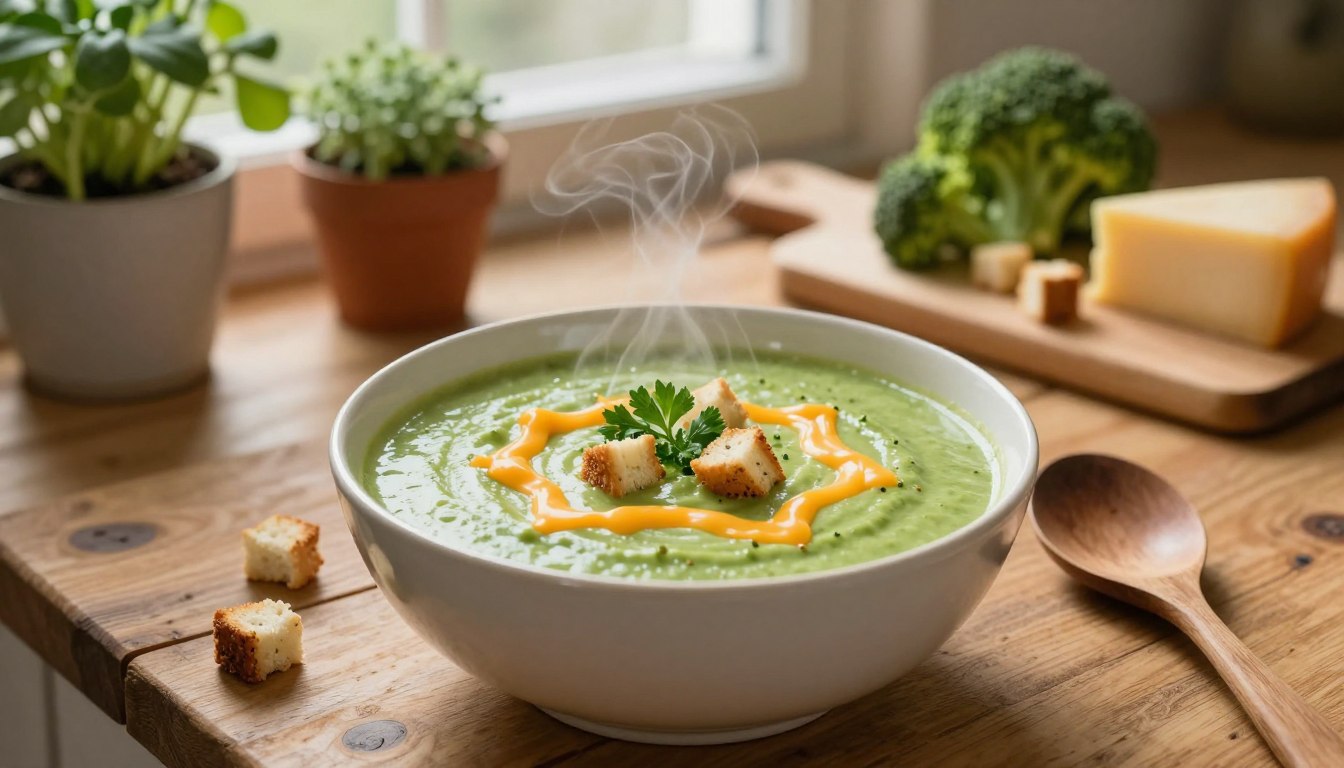
You can also top your cheesy broccoli soup with homemade croutons for a satisfying crunch. These simple additions turn a standard meal into a restaurant-quality experience at home.
Serve, Store, Reheat, and Troubleshoot the Soup
Whether you are planning a cozy family dinner or prepping meals for the week, these tips will help you manage your easy broccoli soup like a pro. Proper handling ensures that your hard work results in a delicious meal every time you sit down to eat.
Best Ways to Serve Easy Broccoli Soup
Crusty Bread, Crackers, and Simple Side Salads
Pairing your soup with the right sides elevates the entire dining experience. A warm, crusty baguette or sourdough bread is perfect for soaking up the creamy broth. For a lighter touch, serve your broccoli cheese soup with saltine crackers or a crisp garden salad tossed in a bright vinaigrette.
Bowls, Bread Bowls, and Toppings for a Family Meal
For a fun family presentation, hollow out small sourdough rounds to create edible bread bowls. You can also customize individual servings with toppings like extra shredded cheddar, crispy bacon bits, or a sprinkle of fresh chives. These small additions make your broccoli cheddar soup feel like a restaurant-quality meal at home.
How to Store Leftover Broccoli Cheese Soup
Refrigerating the Soup Safely
Allow your soup to cool slightly before transferring it into airtight containers. It will stay fresh in the refrigerator for up to three days. Always ensure the lid is sealed tightly to prevent the soup from absorbing other flavors in your fridge.
Freezing Considerations for Dairy-Based Soup
Freezing soups containing dairy can sometimes lead to separation upon thawing. If you plan to freeze your broccoli cheddar soup, consider leaving out the cream or cheese until you reheat it. If it is already mixed, freeze it in portions and stir vigorously while warming to help re-emulsify the ingredients.
How to Reheat Without Breaking the Creamy Texture
The secret to reheating is patience and low heat. Place your soup in a saucepan over medium-low heat, stirring frequently to ensure even warming. Avoid boiling, as high heat can cause the dairy to curdle or the cheese to separate into an oily layer.
Solutions for Common Problems
Soup That Is Too Thick
If your soup becomes too thick after sitting, simply whisk in a small splash of vegetable broth or milk until you reach your desired consistency.
Soup That Is Too Thin
To thicken a thin soup, simmer it uncovered for a few extra minutes to reduce the liquid. Alternatively, whisk in a small amount of cornstarch slurry.
Cheese That Is Grainy or Oily
Grainy texture often happens when cheese is added to boiling liquid. To fix this, remove the pot from the heat and stir in a small amount of room-temperature cream to smooth out the emulsion.
Vegetables That Are Too Firm or Too Soft
If vegetables are too firm, continue simmering gently until tender. If they are too soft, try blending a portion of the soup to create a thicker, smoother base that hides the texture.
| Problem | Quick Fix | Prevention Tip |
|---|---|---|
| Too Thick | Add broth or milk | Use less flour in the roux |
| Too Thin | Simmer to reduce | Add more shredded cheese |
| Grainy Cheese | Whisk in warm cream | Add cheese off the heat |
| Soft Veggies | Blend the soup | Add broccoli later |
Ingredient Substitutions for Dietary Preferences
Vegetarian Broccoli Cheddar Soup
Ensure your soup remains vegetarian by using high-quality vegetable stock instead of chicken broth. Check your cheese labels to confirm they are made with vegetarian-friendly rennet.
Lower-Fat and Gluten-Free Adjustments
For a lower-fat version, substitute half-and-half with low-fat milk or evaporated milk. To make the recipe gluten-free, replace the all-purpose flour in your roux with a gluten-free flour blend or cornstarch.
Conclusion
Creating a delicious homemade broccoli soup relies on your attention to detail during every stage of the process. You now possess the knowledge to transform fresh vegetables and sharp cheddar into a restaurant-quality meal in your own kitchen.
Success starts with precise prep work and careful heat management. By whisking your roux properly and melting the cheese slowly, you ensure a velvety texture that defines a great broccoli cheddar soup. These small steps prevent common issues like graininess or separation.
You have the freedom to customize your bowl to match your personal taste. Adjust the thickness, spice levels, and garnishes to create a signature version of this classic dish. Whether you prefer a smooth puree or a chunky texture, your results will satisfy any craving.
Keep these techniques in mind whenever you prepare a batch for your family. Proper storage and gentle reheating methods keep your leftovers tasting fresh for days. Share your favorite variations with friends or keep this reliable recipe as a staple in your weekly meal rotation.
FAQ
Why should I shred my own cheese for homemade broccoli soup?
For the most creamy broccoli cheddar soup, it is essential to shred your cheese from a block rather than buying pre-shredded bags. Brands like Kraft or Sargento use anti-caking agents like potato starch or cellulose to keep shreds from sticking together in the package. These coatings can prevent the cheese from melting smoothly, resulting in a grainy or lumpy broccoli cheese soup. Using a fresh block of Tillamook Sharp Cheddar ensures a silky, professional finish.
How can I prevent the dairy from curdling in my cheesy broccoli soup?
To maintain a smooth texture, always add your milk or half-and-half over medium-low heat and avoid bringing the soup to a rapid boil once the dairy is incorporated. High temperatures can cause the proteins in the milk to break and separate. When it is time to add the cheese to your easy broccoli soup, remove the pot from the direct heat source or turn it to the lowest setting, stirring in small handfuls at a time until fully melted.
Can I use frozen broccoli instead of fresh for this recipe?
Yes, you can use frozen broccoli for homemade broccoli soup, though fresh florets typically offer a better texture. If you choose frozen, add them toward the end of the simmering process, as they are often blanched before freezing and will cook much faster than fresh vegetables. This helps you avoid overcooking the broccoli into a mushy consistency.
What is the best way to thicken a broccoli cheese soup that is too thin?
If your creamy broccoli cheddar soup isn’t as thick as you’d like, you can use an immersion blender, such as one from KitchenAid, to pulse a small portion of the vegetables directly in the pot. The pureed broccoli and carrots act as a natural thickener. Alternatively, you can let the soup simmer uncovered for a few extra minutes to allow some of the moisture to evaporate before adding the cheese.
Can I make this a vegetarian broccoli cheddar soup?
Absolutely. To make a vegetarian broccoli cheddar soup, simply swap the traditional chicken broth for a high-quality vegetable stock, such as Pacific Foods Vegetable Broth. The rest of the ingredients—including the butter, aromatics, and cheese—remain the same to deliver that classic, comforting flavor profile.
How should I store and reheat leftovers of this easy broccoli soup?
Store your leftover cheesy broccoli soup in an airtight container in the refrigerator for up to three to four days. When reheating, do so gently on the stovetop over low heat, stirring frequently. Avoid the microwave if possible, as uneven heating can cause the cheddar cheese to separate and become oily. If the soup has thickened too much in the fridge, add a splash of milk or broth to loosen it up during the reheating process.
Is it possible to make this soup gluten-free?
Yes, you can easily adapt this homemade broccoli soup to be gluten-free. Instead of using all-purpose flour for the roux, substitute a 1:1 gluten-free flour blend like King Arthur Measure for Measure. You can also omit the flour entirely and thicken the base by blending a boiled potato into the broth before adding your broccoli and cheese.